
What Is a Sectional Warping Machine and How Does It Work?
Contents
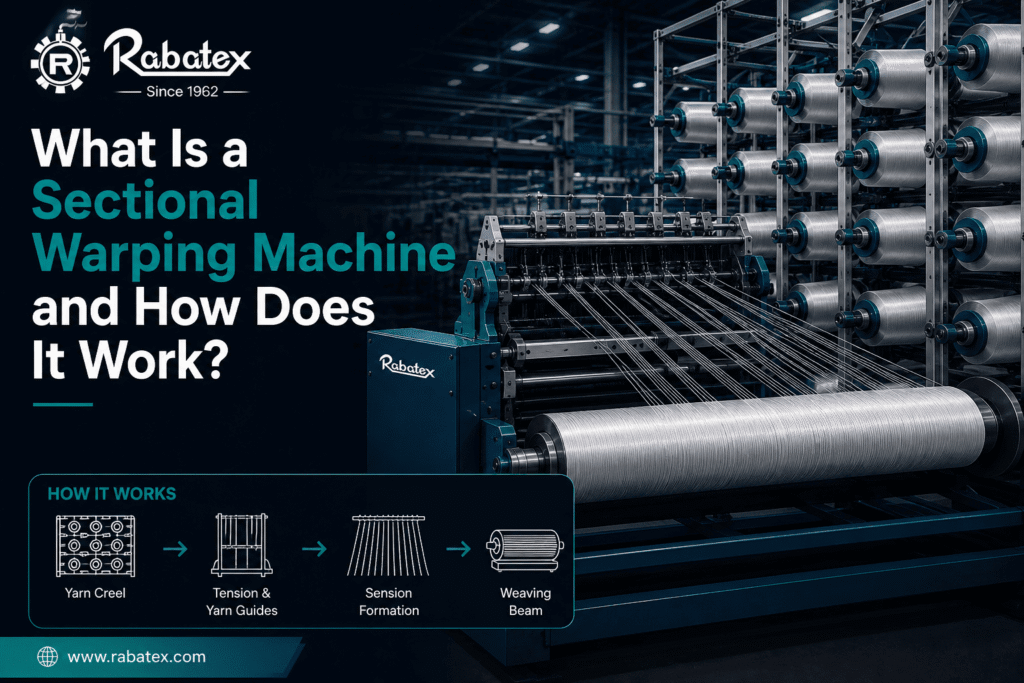
A loom cannot simply take yarn packages and start weaving fabric.
Before the first pick is inserted, hundreds or thousands of yarn ends have to be brought together in the right order, at the required width and length, with the right amount of tension. If that warp preparation is inconsistent, the problem can follow the yarn all the way to the loom.
Now imagine that the warp you need is not something you want to prepare as one wide sheet from the beginning. Perhaps the yarn arrangement needs to follow a particular pattern, different colours need to appear at specific positions, or the warp needs to be built in a controlled sequence.
This is where sectional warping comes into the picture.
Instead of preparing the entire warp in one operation, a sectional warping machine builds it one section at a time. Yarn ends are taken from the creel, arranged into a defined section and wound onto a warping drum. The process is repeated until all the required sections have been prepared. The completed warp is then transferred from the drum onto the weaver’s beam for the next stage of production.
So, what is a sectional warping machine?
In Short
A sectional warping machine prepares warp yarn by forming and winding the required yarn sections onto a warping drum before the complete warp is transferred to a weaver’s beam.
The interesting part is what happens between those two points: individual yarn packages go in, but an organised, weaving-ready warp comes out.
Let’s follow that journey step by step, starting with what makes a sectional warping machine different and then looking at exactly how the sectional warping process works.
What Is a Sectional Warping Machine
A sectional warping machine is part of the weaving preparation process. Its job is to take individual yarn ends from multiple packages and build them into a properly arranged warp.
The word “sectional” describes the way this warp is built.
Rather than trying to prepare the entire warp width at once, the machine creates smaller sections. Each section contains a defined number of yarn ends arranged across a particular width. These sections are wound onto the drum one after another until the complete warp has been built.
This approach gives the operator control over important aspects of warp preparation, including yarn arrangement, section width, yarn length and tension.
What makes a sectional warping machine different
Consider a weaving mill preparing a warp for a fabric that requires a specific yarn arrangement across its width. The operator cannot simply place all the yarns on a beam and expect the required arrangement to happen automatically.
The yarns have to be prepared in a controlled sequence.
In sectional warping, the required yarns are arranged into a section first. That section is then wound onto the drum. The same process is repeated until enough sections have been prepared to form the complete warp.
This is the basic difference from a process where yarn is wound directly onto a warp beam.
The drum acts as an intermediate stage. It allows the complete warp to be built gradually before it is transferred to the weaver’s beam.
What does a section mean in sectional warping
A section is a defined group of warp ends arranged across a particular width.
For example, suppose a warp needs to be prepared across a much wider final beam width. Instead of handling the entire width as one sheet, the machine can prepare a narrower section first. Once that section is completed, the next section is prepared in the same manner.
Think of it like building a wide sheet by placing several narrower strips next to each other. Each strip has to be placed correctly because an error in one strip affects the final sheet.
The same principle applies to sectional warping.
The number of yarn ends in a section and its width depend on the required warp. Once the required sections have been wound, they collectively form the complete warp.
This is why section width, yarn positioning, length and tension matter throughout the process.
The main machine parts and what they do
You do not need to know every part of a sectional warping machine to understand how it works. A few key parts explain most of the process.
Creel
Holds the yarn packages and allows the required yarn ends to be supplied to the warping machine.
Yarn guides and tensioning system
Guide the yarn towards the warping area while helping maintain controlled yarn movement and tension.
Section formation and traversing system
Positions the yarn correctly across the required section width. The traversing movement is important because the yarn needs to be laid in the correct position as the drum builds up.
Positions the yarn correctly across the required section width. The traversing movement is important because the yarn needs to be laid in the correct position as the drum builds up.
Warping drum
The drum is where the sections are wound. Each section is built on the drum until the complete warp has been prepared.
Leasing arrangement
Helps maintain the required separation and order of the warp ends before the completed warp is transferred for beaming.
Beaming unit
Once the warp has been prepared on the drum, the beaming unit transfers it onto the weaver’s beam.
The working principle can therefore be understood in a simple sequence:
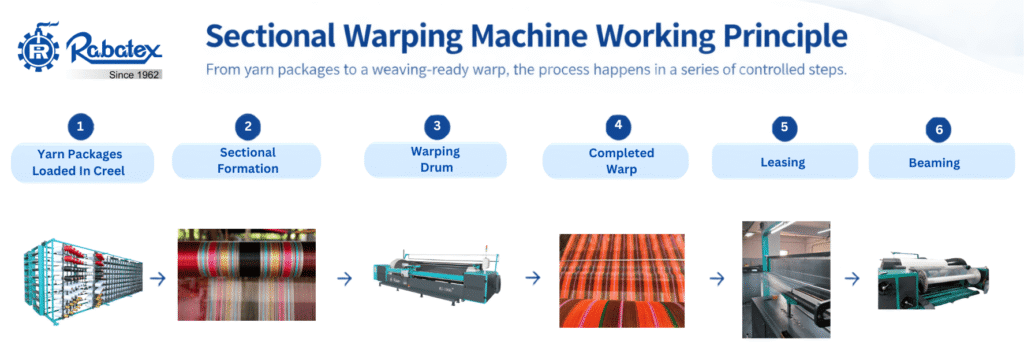
How Does the Sectional Warping Process Work – 7 Steps
The sectional warping process is easier to understand when followed from one stage to the next.
1.Yarn Packages Are Fed From the Creel
The process starts with the yarn packages.
At this stage, the objective is simple. The yarn has to reach the warping section smoothly and in the required arrangement. Uncontrolled yarn movement or tension variation at the beginning can affect what happens later during section formation and drum winding.
For example, if a mill is preparing a warp with a large number of yarn ends, each end needs to reach the warping zone without unnecessary variation. The machine therefore needs to control the yarn path and the operating conditions throughout the process.
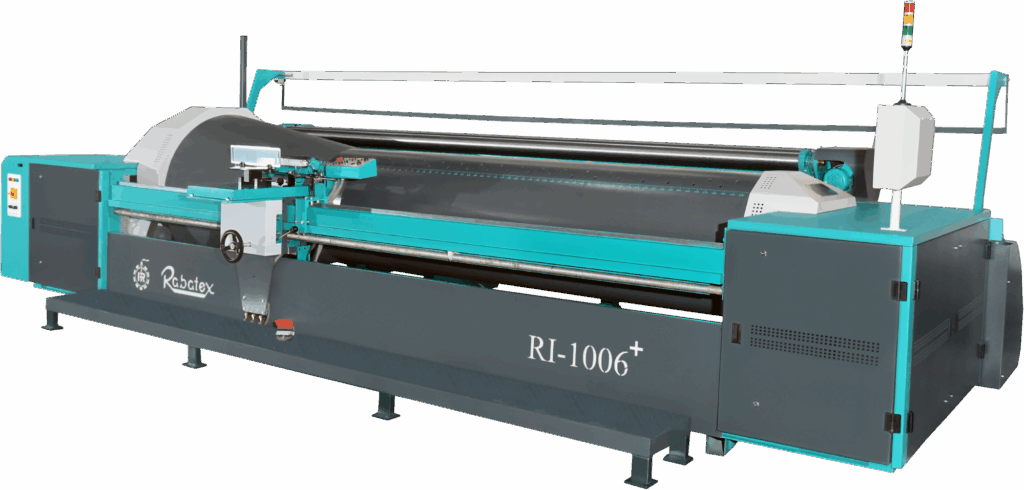
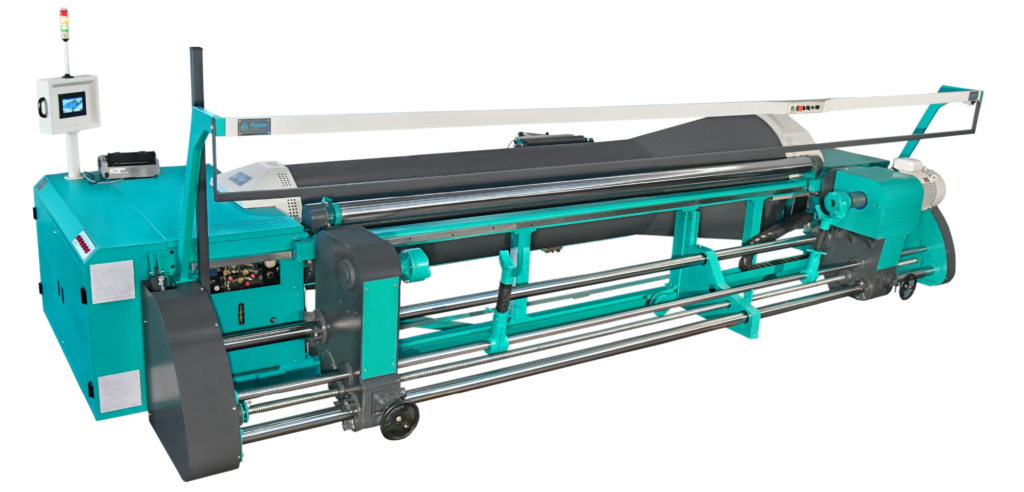
Rabatex’s RI 1006+ uses PLC-based control along with constant warping line speed control, precise length control through an encoder and controller, and broken-end memory. These features help the operator maintain control over the warping operation as the machine prepares the warp.
The exact yarn handling arrangement can vary according to the yarn and production requirement, so the machine configuration needs to be matched to the application.
2.The Yarn Ends Are Arranged Into a Section
Once the yarn leaves the creel, the next task is to form the section.
The required number of yarn ends is brought together and distributed across the required section width. The yarn has to remain in the intended order and position as it moves towards the drum.
This is where the meaning of “section” becomes practical.
Imagine a weaving mill preparing a warp for a patterned fabric where different yarn arrangements need to appear at specific positions. The yarn ends cannot simply be placed together without considering their order. Their positioning during warping contributes to the final arrangement of the warp.
The machine therefore has to maintain the required section width and yarn placement while the section is being prepared.
This becomes even more important when the warp contains different colours or yarn arrangements. The section needs to be prepared consistently because every section will eventually contribute to the complete warp.
The closer the yarn is delivered to the drum and the more accurately the section is positioned, the easier it is to maintain the intended warp construction.
Rabatex’s sectional warping machines include features designed around this requirement. For example, the RI 107i uses a servo-driven reed table traverse and a yarn delivery arrangement designed to keep delivery close to the drum and reduce section-width misalignment and cross ends.
3.The Section Is Wound Onto the Warping Drum
Once the section has been formed, the actual winding operation begins.
The arranged yarn sheet reaches the warping drum. As the drum rotates, the yarn is wound across the defined section width. The traversing system moves the yarn into the required position while the section builds up layer by layer.
The basic operation can be understood in six steps:
- The arranged yarn sheet reaches the warping drum.
- The drum rotates and winds the yarn.
- The yarn is laid across the defined section width.
- The traversing system positions the yarn correctly.
- The yarn builds up on the drum in successive layers.
- The machine controls the required operating conditions as the section is formed.
This stage is where accuracy starts to have a direct effect on the finished warp.
If the yarn tension changes significantly, the section may not build consistently. If yarn positioning is incorrect, the section width can change. If the required length is not maintained, the finished warp may not meet the production requirement.
Modern sectional warping machines use different control systems to manage these variables.
1,000 MPM max warping speed
The Rabatex RI 109 uses a laser sensor for yarn build-up measurement and automatic feed value setting, along with servo-controlled traverse systems, online actual length measurement and constant warping line speed control.
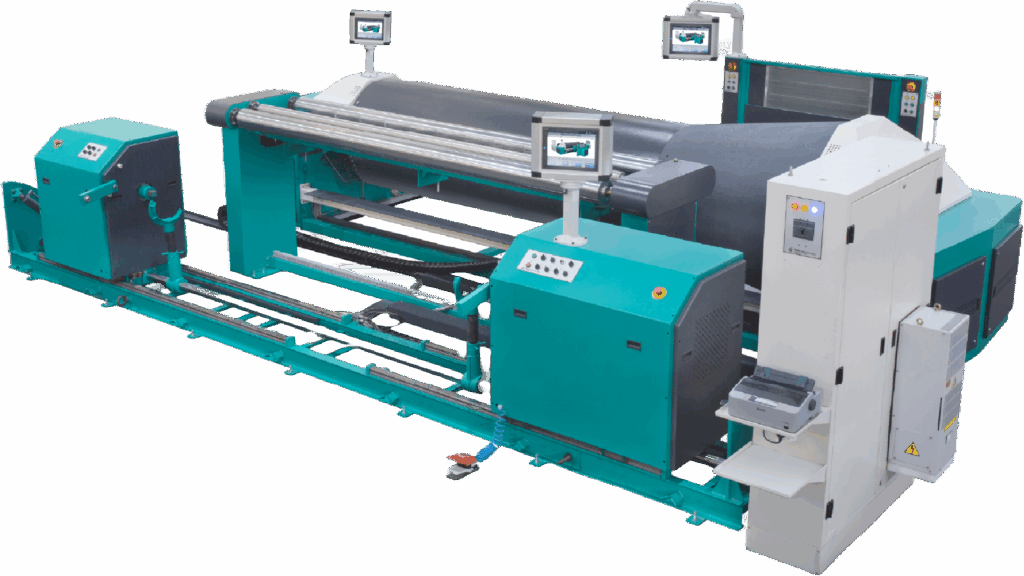
For a production manager, these are not simply machine specifications. They relate directly to how consistently the warp can be prepared.
4.The Machine Repeats the Process for Every Section
The first section is only one part of the final warp.
Once it is completed, the machine prepares the next section. The yarn is positioned for the next section and the winding operation continues.
This is repeated until the required number of sections has been prepared.
For example, if a particular warp requires several sections to reach its final width, each section needs to follow the same basic requirements for width, length, yarn arrangement and tension. The sections gradually build into one complete warp on the drum.
This repeated section-by-section operation is the defining feature of sectional warping.
Key takeaway
The goal is not simply to wind yarn onto the drum. The goal is to build the required warp in a controlled and repeatable manner.
5.The Completed Sections Form the Full Warp
After the required sections have been wound, the drum now contains the complete warp.
What started as individual yarn ends in separate packages has become an organised warp with the required width, length and yarn arrangement.
The sections are no longer treated as separate pieces of production. Together, they form the warp that needs to be transferred to the weaver’s beam.
Before that transfer takes place, the warp needs to remain properly organised. This is where leasing becomes important.
6.Leasing Keeps the Warp Ends in the Required Order
Leasing helps maintain the separation and order of the warp ends.
This matters because the yarn ends need to remain organised as the prepared warp moves into the beaming stage. If the ends become tangled or lose their intended arrangement, handling the warp becomes more difficult and the final beam may not be prepared as required.
In simple terms, leasing helps keep the yarn sheet organised before it is transferred to the beam.
On advanced sectional warping machines, leasing can also be controlled through programmable systems. The Rabatex RI 109, for example, includes a programmable leasing device and a PLC-controlled leasing system.
7.The Completed Warp Is Beamed Onto the Weaver’s Beam
The final stage is beaming.
The prepared warp is transferred from the drum and wound onto the weaver’s beam. This beam is then ready to move into the next stage of weaving preparation and, ultimately, to the loom.
Tension remains important during this transfer. The warp that was carefully prepared on the drum now needs to be transferred without compromising its organisation and required build.
This is also where the machine configuration can make a practical difference.
Rabatex’s RI 107i has an integrated heavy-duty beaming unit, so the beaming arrangement is built into the machine setup. The RI 107s, on the other hand, uses a separate heavy-duty beaming unit. Both machines are designed for sectional warping, but the beaming arrangement is different.
For a mill, this distinction can matter when planning the production floor, workflow and machine configuration.
The finished beam is the result of the entire process. Individual yarn packages have been converted into an organised warp that can move forward into weaving.
How Sectional Warping Differs From Direct Warping
Both sectional and direct warping are used to prepare yarn for weaving, but the way the warp is built is different.
| Aspect | Sectional Warping | Direct Warping |
|---|---|---|
| Process method | Warp is prepared section by section on a warping drum before beaming | Yarn ends are wound directly onto a warp beam |
| How the warp is built | Multiple sections are formed and combined to create the required warp | The required yarn ends are wound onto the beam during the warping operation |
| Typical production considerations | Useful when yarn arrangement, colour pattern, section width or specific warp construction needs to be managed section by section | Often considered when straightforward, continuous warp preparation suits the production requirement |
| When each method may be evaluated | When the production requires section-wise preparation and control over warp arrangement | When direct warp preparation fits the yarn, beam and production requirements |
The right method depends on the fabric, yarn, warp construction and production setup. The important point here is that sectional warping creates the warp progressively on a drum before the completed warp moves to the beaming stage.
Choose the Right Sectional Warping Solution for Your Production Needs
Understanding the sectional warping process is useful, but the next question for a textile manufacturer is usually more practical.
Ask this
Which machine configuration makes sense for my production?
The answer depends on your actual requirements. Working width, yarn arrangement, production volume, warping and beaming speed, level of machine control and the type of beaming arrangement all need to be considered together.
Rabatex offers several sectional warping machines for different production requirements.
RI 109
- Advanced servo-controlled systems
- Laser-based yarn build-up measurement
- Working width 1,900 mm to 4,400 mm
- Max warping speed 1,000 MPM
- Max beaming speed 200 MPM
RI 107i
- Sectional warping with integrated beaming unit
- Working width 1,900 mm to 4,400 mm
- Servo-driven reed table traverse
RI 107s
- Separate heavy-duty beaming unit
- Working width 1,900 mm to 4,400 mm
- Max warping speed 800 MPM
- Max beaming speed 150 MPM
RI 1006+
- Solid metallic drum
- Encoder-based length accuracy
- PLC control
- Max warping speed 600 MPM
The important point is that you should not select a sectional warping machine based on speed alone.
Your yarn type, required warp width, section requirements, production volume, beam size and preferred beaming arrangement all need to fit together.
If you are planning a new weaving preparation setup, replacing an existing warping machine or increasing production capacity, start with your actual production requirements. Then compare the machine configuration against those requirements.
Explore the Rabatex sectional warping range or speak with the Rabatex team about your yarn, working width and production requirements to identify a suitable configuration for your mill.
FAQs
What is a section in sectional warping?
A section is a defined group of warp ends arranged across a particular width and wound onto the warping drum. Multiple sections are prepared and combined to form the complete warp.
Why is the warp divided into sections?
Dividing the warp into sections allows the required yarn arrangement, section width, length and other process parameters to be managed during warp preparation before the complete warp is transferred to the weaver’s beam.
What is the purpose of the warping drum?
The warping drum provides the surface on which the individual warp sections are wound and built up before the completed warp is transferred for beaming.
How are yarn ends arranged during sectional warping?
The yarn ends are withdrawn from the creel, guided into the required arrangement and distributed across the specified section width before being wound onto the drum.
How is yarn tension controlled during sectional warping?
Yarn tension is managed through the machine’s yarn handling and control systems during warping and beaming. The exact tension control arrangement depends on the machine configuration and application.
What happens after the sections are wound onto the drum?
Once the required sections are completed, they collectively form the full warp on the drum. The warp is then prepared for leasing and transferred to the weaver’s beam.
What is the purpose of leasing in sectional warping?
Leasing helps maintain the separation and order of the warp ends so that the yarn sheet remains organised during the transition from warping to beaming.
How is the completed warp transferred to the weaver's beam?
The completed warp is transferred from the warping drum and wound onto the weaver’s beam under controlled operating conditions. The exact arrangement depends on whether the machine uses an integrated or separate beaming unit.
What is the difference between sectional warping and direct warping?
Sectional warping builds the warp section by section on a warping drum before beaming. Direct warping prepares the yarn directly onto the warp beam. The appropriate method depends on the yarn, warp construction and production requirements.
Keyur Panchal
Writes about material handling, automated storage and warehouse planning for Rabatex Industries Pvt. Ltd., Ahmedabad.
Related Posts
What Is a Vertical Lift Module? A Complete Guide to VLM Storage Systems
Walk into almost any textile manufacturing facility, and you’ll notice
How to Choose the Right Sectional Warping Machine for Your Textile Mill
“The loom has stopped again.” No production manager wants to

How Apparel Manufacturers Speed Up Fabric Development with Sample Warping Machines
“Can we see two more fabric options before we finalize