
Precision Hank Winding Machine for Even, Dye-Ready Hanks
The Rabatex Precision Hank Yarn Reeling Machine winds 24 hanks in one cycle, with 12 on each side. Servo controlled traverse, individually monitored yarn paths and encoder based length measurement give you uniform hanks, fewer stoppages and a clear record of every batch.
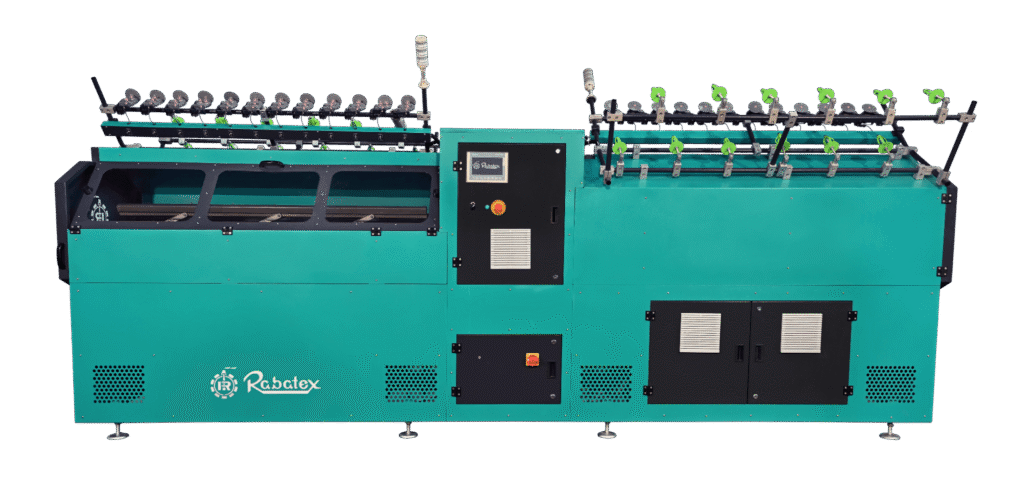
24
Hanks Per Cycle
1000MPM
Winding Speed, Up To
3,000g
Hank Weight, Up To
95–520mm
Hank Width
Rabatex’s Precision Hank Winding Machine
Yarn that goes to dyeing in hank form needs to be wound evenly. If the tension, pitch or length changes from one hank to the next, you see it later as shade variation, tangles and rework.
This machine by Rabatex controls those variables at the source. A servo motor drives the yarn traverse, so the winding angle and pitch stay exactly where you set them. An AC drive turns the drum, and a second AC brake motor with encoder expands and collapses it. Each yarn path has its own tensioner, brake sensor and stop motion sensor, so a problem on one end does not go unnoticed.
This machine by Rabatex controls those variables at the source. A servo motor drives the yarn traverse, so the winding angle and pitch stay exactly where you set them. An AC drive turns the drum, and a second AC brake motor with encoder expands and collapses it. Each yarn path has its own tensioner, brake sensor and stop motion sensor, so a problem on one end does not go unnoticed.
Two 7-inch touchscreens put the controls where the operator works. You set length and speed, watch the actual values live, and review the last 10 batches without leaving the panel.
Rabatex has been building yarn preparation machinery since 1962, and this machine carries that experience into hank winding.
How Rabatex's Sectional Warping Range Is Built
Uneven hanks that cause dyeing problems
Challenge
When the winding angle drifts, hanks come out loose in some places and tight in others. The difference shows up later as uneven dyeing.
Solution
A servo drive holds the winding pitch and angle, with pitch adjustable from 0.05 mm to 1 mm. You can choose a constant or a variable traverse angle pitch to suit the yarn and the hank.
Tension that changes from one yarn end to the next
Challenge
Inconsistent tension is a common reason hanks differ from each other.
Solution
Every yarn path has a ratchet type tensioner with adjustable angle, adjustable pitch and its own toggle switch. You set and correct tension end by end.
Yarn breaks that are found too late
Challenge
On a manual or basic machine, a broken end can keep winding until someone notices, and the hank is spoiled.
Solution
Individually controlled stop motion sensors detect the break and the machine stops automatically. The alarm and tower light show the operator where to look.
Length that varies across a batch
Challenge
Hanks that should match in length often do not.
Solution
An encoder measures length in real time. You set the target length on the HMI and watch the actual value live.
Slow changeovers between hank sizes
Challenge
Mills and dyeing units rarely run a single hank size, and every change of setup costs time.
Solution
Hank circumference from 1,066 to 1,473 mm, hank width from 95 to 520 mm and an adjustable drum diameter let one machine cover a wide range of sizes. The HMI keeps the last 10 batch recipes, so repeat orders start faster.
No record of what was produced
Challenge
Without data, tracing a problem back to a batch is guesswork.
Solution
The built-in data log records start and end date and time, length, speed, pitch and hank width for every batch.
Operator risk around moving parts
Challenge
A rotating drum and a moving traverse need real guarding.
Solution
Door sensors, a yarn guide over-traverse sensor, a homing sensor and emergency stops work together to protect the operator and the machine.
Key features of the Hank Winding Machine
- Dual 7-inch touchscreen HMI with quick access function switches
- Individually controlled operation dashboard for each side
- Drum expand and collapse controlled by variable frequency drive
- Winding pitch and angle controlled by servo drive
- Drum winding controlled by variable frequency drive
- Variable winding stroke setting for a precise winding angle
- Real-time length measurement through encoder
- Real-time data monitoring for all motors
- Overload indication for all motors
- Auto stop on yarn breakage with alarm and tower light indication
- Individually controlled stop motion sensors
- Advanced operator safety features on each side with pop-up alarms
- Troubleshooting checkpoints and test mode menu
- Last 10 batch recipes stored in the HMI history
- Energy-efficient design
- Ratchet type tensioners with bi-directional yarn sensing and LED indication on every yarn path
Hank Winding Machine Specifications
Technical Features
| Parameter | Specification |
|---|---|
| Number of hanks | 24, with 12 on each side |
| Winding speed | Up to 1000 MPM |
| Yarn guide traverse speed | Up to 350 double strokes per minute |
| Yarn brake | Through sensor and indicator |
| Yarn tension control | Through ratchet-type tensioners |
| Length measurement | Through encoder |
| Winding stroke | Up to 520 mm |
| Winding pitch | 0.05 mm to 1 mm |
| Parameter | Specification |
|---|---|
| Winding motor | 3 HP AC motor |
| Winding drive | AC drive |
| Winding traverse controlled by | Servo motor |
| Input power supply | 450 V, 3 phase |
| Dimensions | 6159 mm length, 1290 mm width, 2109 mm height |
| Weight | 1900 kg |
| Power consumption each side | 1.9 kWh at 1000 MPM |
Hank Specification
| Parameter | Specification |
|---|---|
| Hank circumference | 1,066 to 1,473 mm, which is 42 to 58 inches |
| Hank weight | Up to 3,000 g per hank |
| Hank width | 95 to 520 mm |
How the Hank Winding Machine Works
Yarn runs from packages on the bobbin holders, which suit any type of paper tube and adjust for package height and diameter. It passes through a ratchet-type tensioner and a yarn brake sensor, which watches for breaks and shows yarn status through an LED indicator. A servo-controlled traverse then lays the yarn onto the drum at the pitch and stroke you set on the HMI.
The drum turns on an AC motor with encoder, so length is counted as the yarn is wound and the machine stops when the set length is reached. When the batch is done, the drum collapses through its AC brake motor and you remove the finished hanks. It then expands again for the next batch.
How Rabatex's Sectional Warping Range Is Built
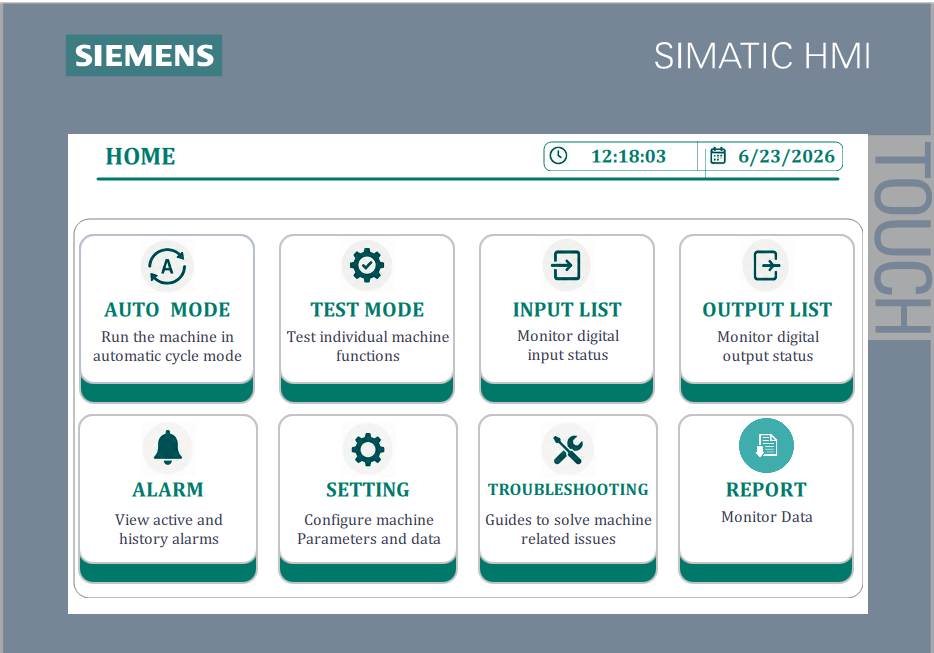
Operating HMI panel
The Siemens SIMATIC HMI uses a 7-inch multicolor touchscreen. You set length and speed and see the live actual speed beside them. Real-time status monitoring and pop-up alarms tell you what the machine is doing and what needs attention. The screen offers auto mode, test mode, input list, output list, alarm, setting, troubleshooting and report options, so most tasks are one tap away.
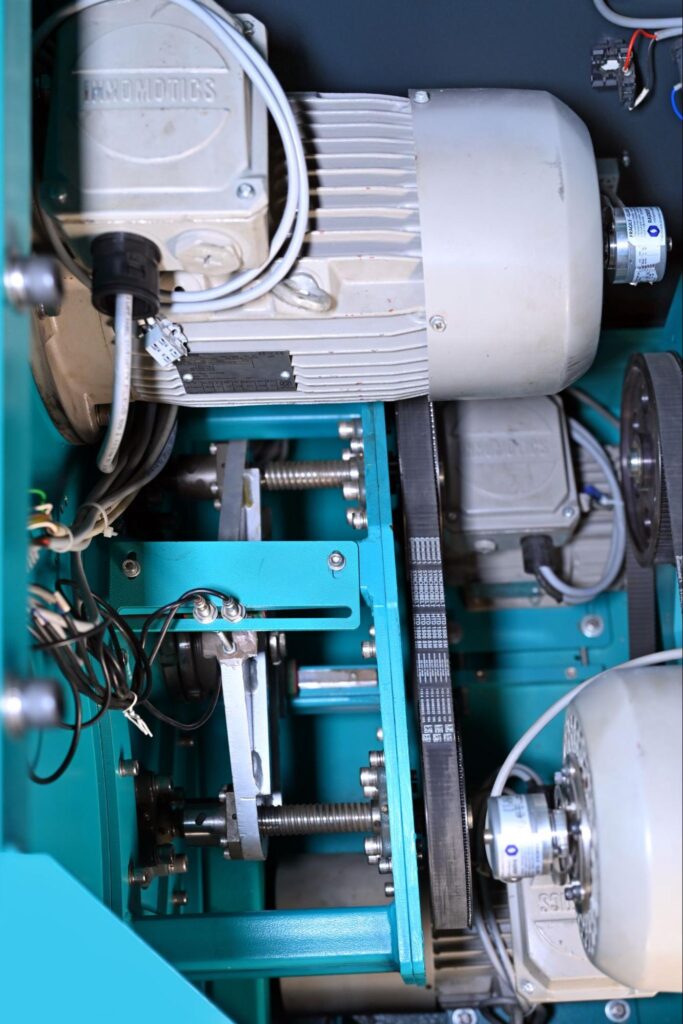
Drive Systems
The yarn traverse runs on a servo motor. The drum rotation uses an AC motor with encoder, and the drum expand and collapse uses an AC brake motor with encoder. All drives use timing belts and pulleys, which keeps motion smooth and repeatable.
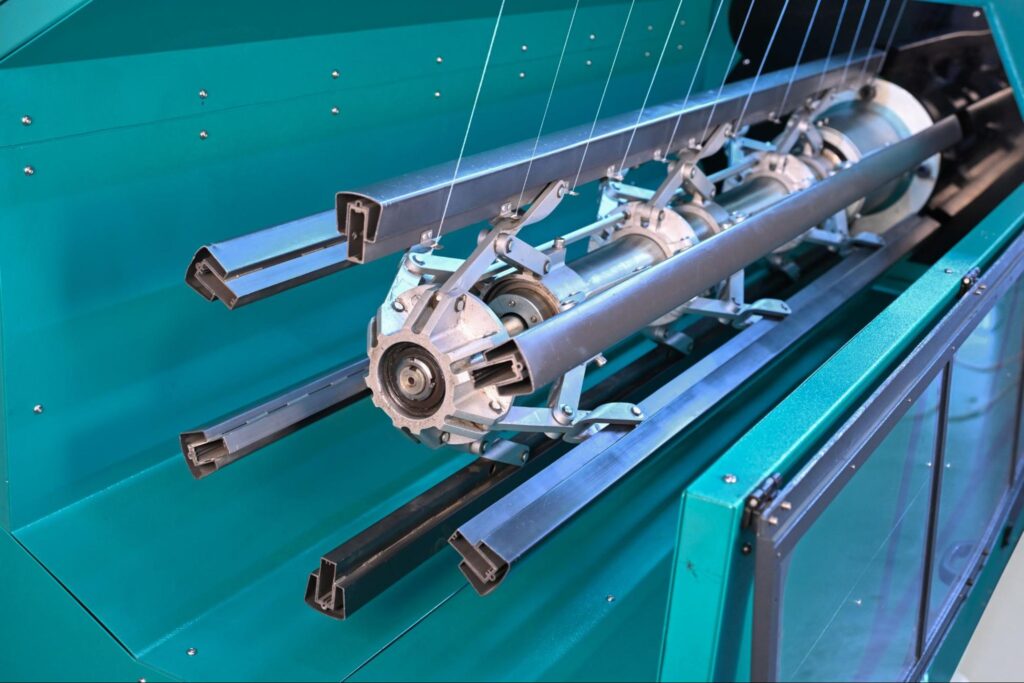
Drum Assembly
The drum diameter is adjustable, and the lightweight hardened aluminum links make handling easier. Ergonomic winding shape profiles and a yarn knotting hook help the operator finish and remove hanks quickly.
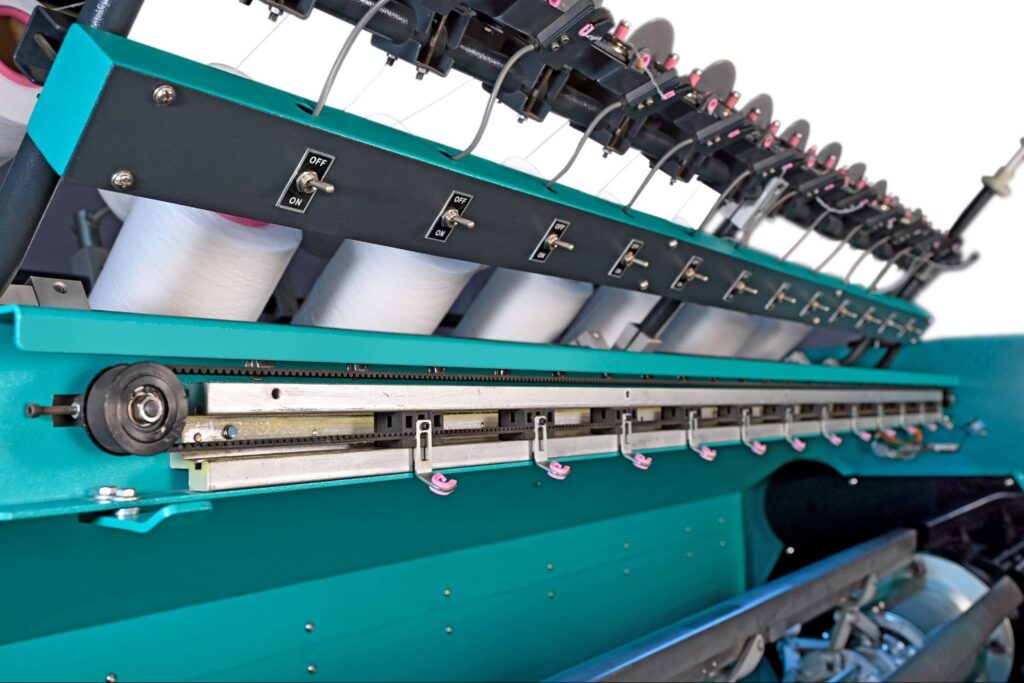
Yarn Traverse Assembly
Servo control, a timing belt and pulley drive and high precision winding keep the yarn laid evenly across the hank width. You can choose a constant traverse angle pitch or a variable traverse angle pitch.
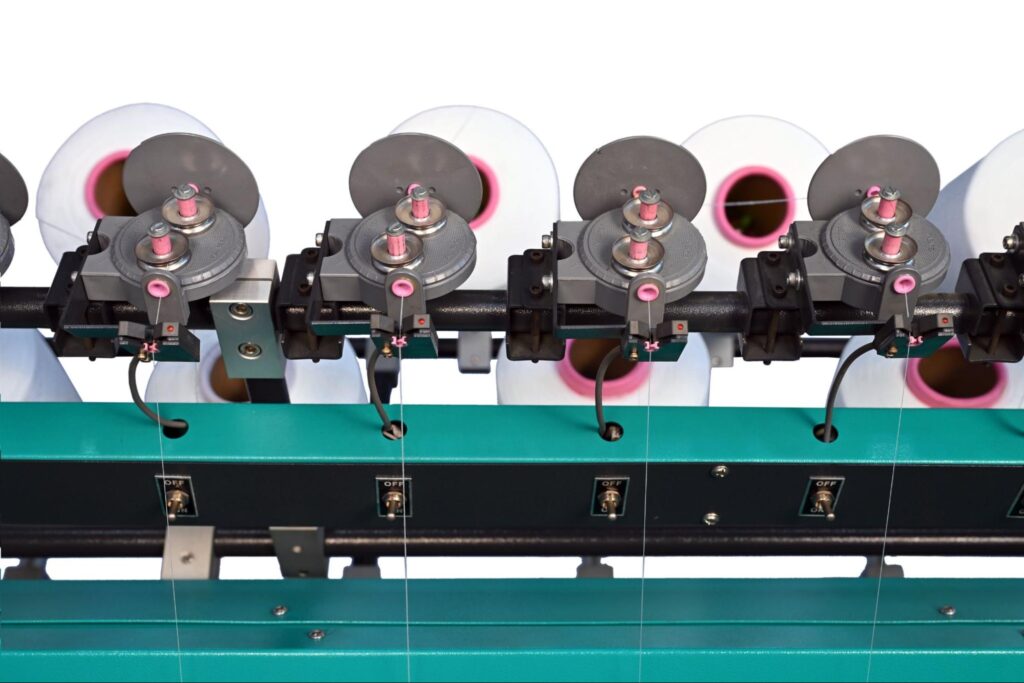
Tensioner Assembly
Ratchet-type tensioners with bi-directional yarn sensing sit on every yarn path. An LED shows the state of the yarn, the angle and pitch are adjustable, and each tensioner has an individual toggle switch.
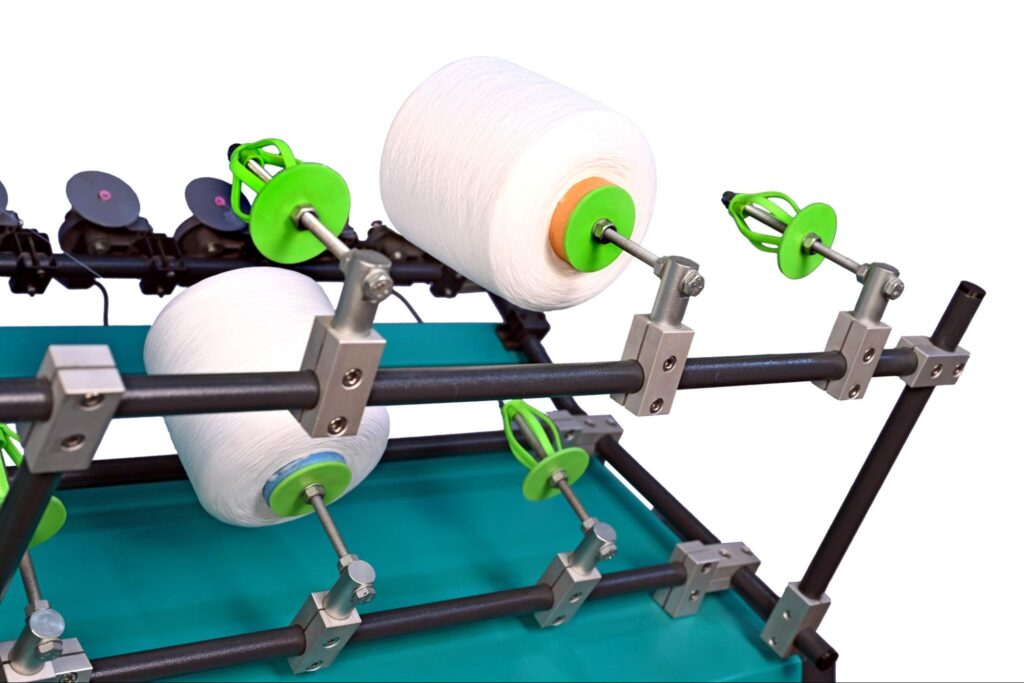
Bobbin Holder Assembly
The holders accept any type of paper tube. You can adjust the angle according to package height and the pitch to suit package diameter, so different package sizes can run on the same machine.
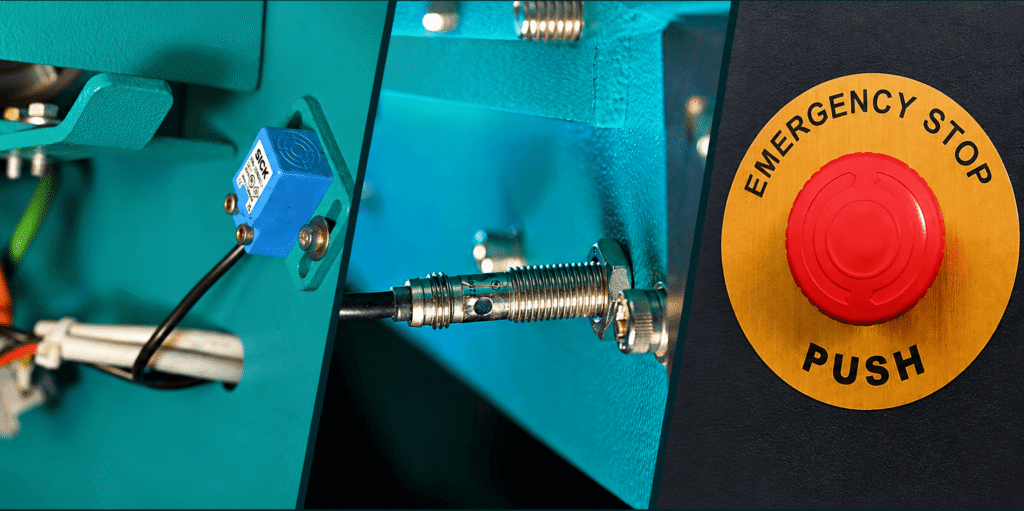
Safety and Sensors
The machine uses front door sensors, side door sensors, yarn guide over-traverse sensors, a yarn brake sensor, a homing sensor and expand and collapse sensors, along with an emergency stop on each side.
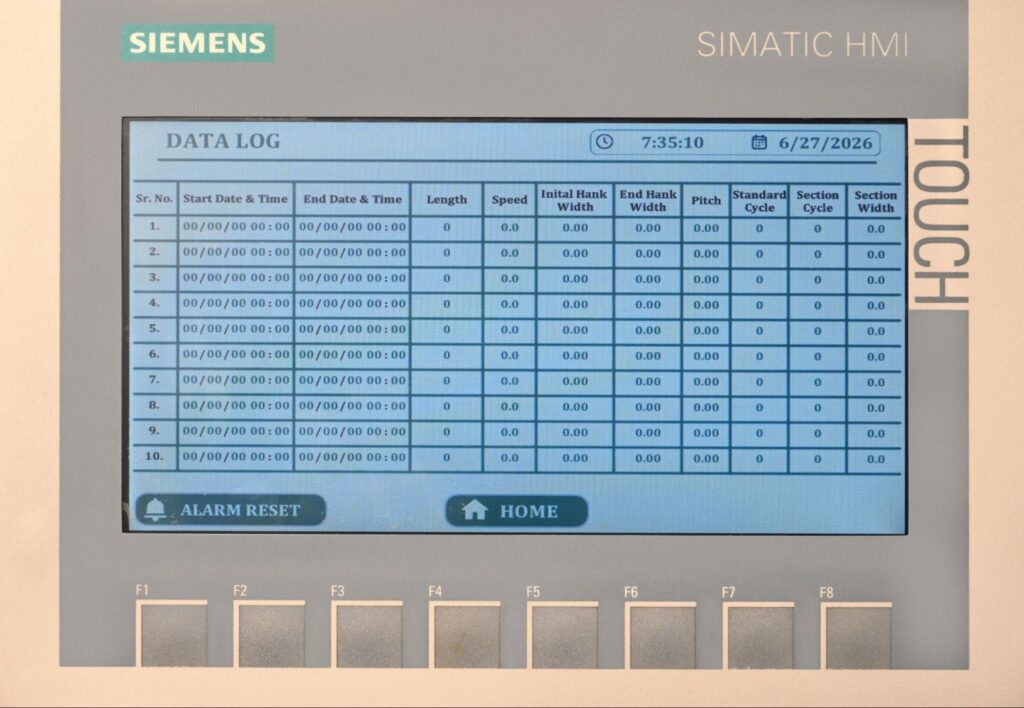
Data Log
The data log stores the last 10 batch production records. It captures start and end date and time for every batch, and logs length, speed, pitch, and initial and end hank width. It also records the standard cycle, section cycle and section width.
This Is How a Finished Hank Looks After a Full Winding Cycle
Every hank leaves the machine with the same shape, the same length and an even layer of yarn. That is what a dye house wants to see. Even winding gives you a hank that opens cleanly and loads without tangles.
You can set hank circumference from 1,066 to 1,473 mm and hank width from 95 to 520 mm, with up to 3,000 g in each hank. The machine winds 24 hanks in one cycle, and the encoder holds each one to the length you set.
The data log keeps a record of every batch, so you can trace any hank back to the settings it was wound on.

The Smarter Way To Prepare Your Hanks Starts Here
Tell us the yarn you run, the hank size you need and your daily volume. Our team will help you set up the right configuration and show you the machine at work.
Why Choose Rabatex Hank Winding Machine
Consistent Hank Quality
Servo-controlled traverse sets the winding pitch anywhere from 0.05 mm to 1 mm, so every hank follows the same winding pattern.
Measured Length on Every Hank
An encoder measures length in real time, so each hank in a batch carries the length you set.
Fewer Losses From Yarn Breaks
The machine stops on yarn breakage and raises an alarm and a tower light, so a broken end does not run on into the hank.
Quick Changeovers
The drum diameter, winding stroke up to 520 mm and winding pitch are all adjustable, so one machine handles a wide range of hank sizes.
Safer for Operators
Front and side door sensors, emergency stop buttons on each side and pop-up alarms keep the operator protected during every run.
Energy Efficient Running
Each side draws 1.9 kWh at 1000 MPM, and all drives run on timing belts and pulleys for steady, low-maintenance power transfer.
Answers Yarn Processors Ask Us First
What is a hank winding machine?
A hank winding machine winds yarn from packages onto an expanding drum to form hanks, which are loose loops of yarn used mainly for dyeing. The Rabatex Precision Hank Winding Machine does this with servo controlled traverse and encoder based length measurement.
How many hanks can the machine wind at one time?
It winds 24 hanks per cycle, with 12 hanks on each side.
What hank sizes can it produce?
Hank circumference ranges from 1,066 to 1,473 mm, which is 42 to 58 inches. Hank width ranges from 95 to 520 mm, and hank weight goes up to 3,000 g.
How fast does the machine wind?
Winding speed goes up to 1000 MPM, and the yarn guide traverse runs at up to 350 double strokes per minute.
What happens when a yarn end breaks?
The machine stops automatically on yarn breakage. An alarm sounds and the tower light shows the operator that attention is needed. Each yarn path has its own stop motion sensor, so the break is detected on the exact end where it happens.
Can I track length and batch data?
Yes. An encoder measures length in real time, and the built-in data log stores the last 10 batch records, including start and end time, length, speed, pitch and hank width.
Which yarn packages can I use?
The bobbin holders suit any type of paper tube. You can adjust their angle for package height and their pitch for package diameter.
What are the machine size and weight?
The machine measures 6159 mm in length, 1290 mm in width and 2109 mm in height, and weighs 1900 kg.
Does Rabatex provide installation and after-sales support?
Yes. Rabatex provides installation, commissioning, operator training, maintenance support and after-sales service.